
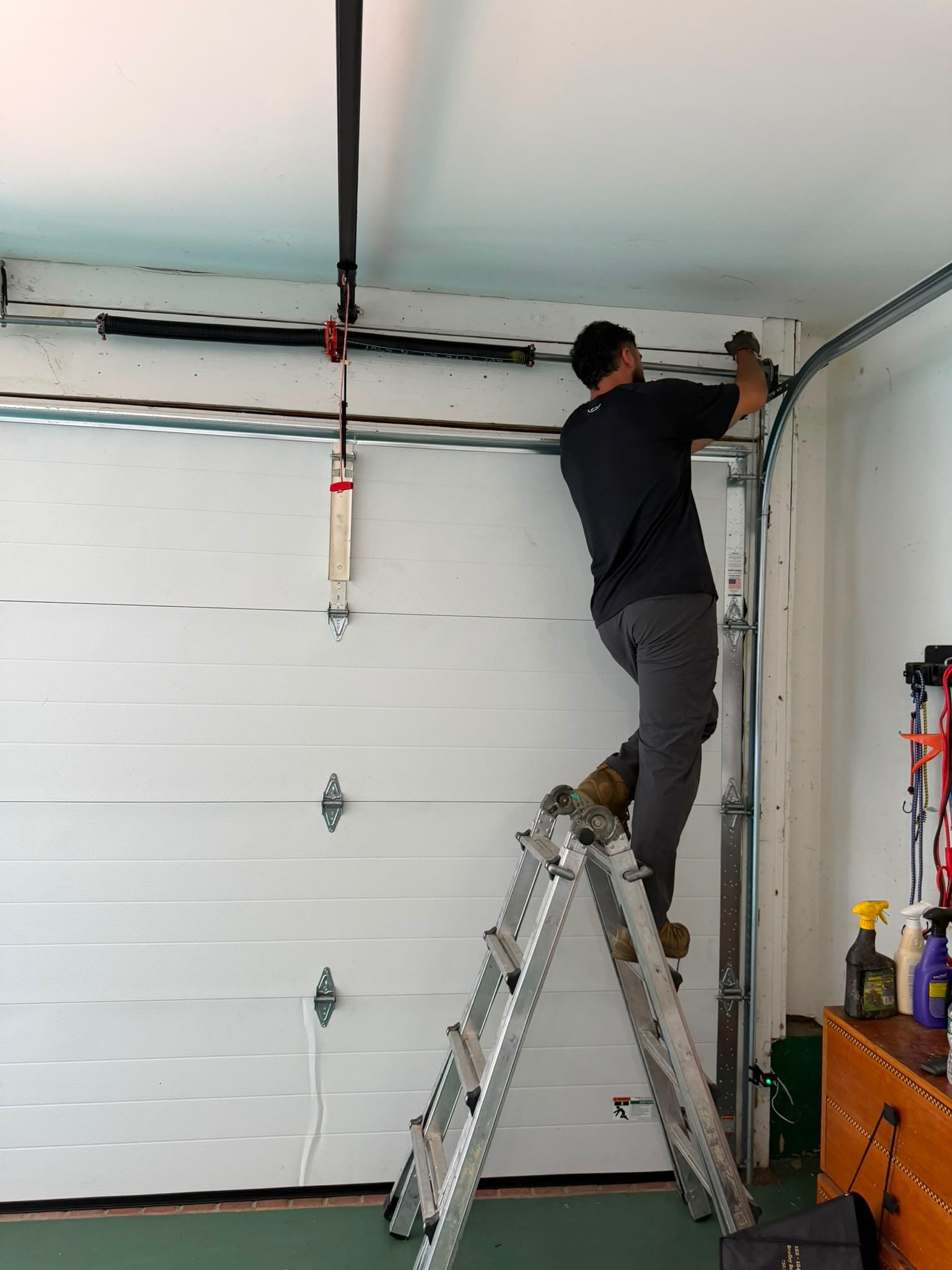
Emergency Garage Door Spring Repair in Voorhees NJ 08043
Emergency garage door spring repair in Voorhees, NJ 08043 requires immediate professional intervention because broken springs release severe tension, immobilizing heavy 150 to 400 pound doors. Attempting manual operation or improper DIY fixes risks catastrophic injury and operator destruction. We supply fast 24/7 restoration, replacing snapped torsion or extension springs with matched high-cycle components tailored to South Jersey weather.
Garage door springs serve as the mechanical backbone of your entire garage door assembly. They store kinetic energy by winding or stretching under heavy mechanical tension, effectively counterbalancing the door weight so that your electric motor or manual lifting efforts require minimal force. When a high-tension spring snaps, the full static weight of the door crashes down, making it impossible to move safely.
In Voorhees Township and surrounding Camden County neighborhoods, emergency spring failures often happen during critical moments, such as early morning commutes or sudden storm events. Attempting to force an unassisted door open using an automatic opener can strip the internal drive gears, burn out the electric motor, or bend upper panel sections beyond repair.
According to safety statistics published by the U.S. Consumer Product Safety Commission (CPSC), thousands of emergency room visits occur annually in the United States due to improper garage door repairs and unexpected mechanical failures. We prioritize rapid response across the 08043 zip code to secure compromised doors, relieve trapped vehicles, and prevent physical injury.
Critical Risks and Common Spring Failure Modes in South Jersey
Garage door springs in Camden County fail primarily from metal fatigue, severe seasonal temperature drops, humidity-induced oxidation, and uneven winding tension. When a spring snaps, it releases thousands of inch-pounds of stored torque instantly. Understanding these failure mechanisms helps homeowners recognize urgent warning signs before complete mechanical collapse occurs.
Temperature-Driven Metal Fatigue in Winter
Winter freeze cycles in Voorhees cause spring steel to contract and become brittle, significantly increasing stress under heavy tensile load. When temperatures plummet, worn springs near their ten-thousand-cycle limit frequently snap during initial morning lift cycles. We mitigate this localized stress by installing cold-resistant, oil-tempered steel springs calibrated specifically for mid-Atlantic weather extremes.
Standard garage door springs suffer from cumulative mechanical fatigue as they compress and expand over years of daily service. Each opening and closing action counts as one complete cycle. Over time, micro-fractures develop deep within the steel matrix, unseen by the untrained eye.
When extreme South Jersey winter temperatures arrive, cold steel loses ductility and elasticity. The sudden application of high torque on brittle cold steel transforms microscopic hairline cracks into complete mechanical fractures.
- Micro-fracture development due to repeated cycle stress over six to ten years.
- Thermal contraction caused by sudden freezing temperatures in Camden County.
- Sudden torque shock during cold morning automated opener activation.
- Lack of low-temperature synthetic lubrication on spring coils.
Rust Propagation and Moisture Degradation
Humidity and winter slush accumulation inside unheated Voorhees garages create ideal conditions for surface rust and pitting on spring coils. Rust creates localized stress points that weaken structural steel integrity and accelerate sudden mechanical failure. We resolve moisture degradation by utilizing galvanized or coated high-cycle springs paired with protective silicone lubrication.
Unheated residential garages in 08043 experience significant relative humidity fluctuations throughout spring and summer, followed by moisture brought in by snow-covered vehicles during winter. Moisture settles between tightly wound spring coils where air circulation is minimal.
As rust forms, it creates surface friction between adjacent coils as they wind and unwind. This grinding friction wears away the steel diameter, lowering the maximum torque rating and creating pitting that acts as a breaking point under high stress.
- High indoor relative humidity during humid South Jersey summer months.
- Corrosive road salt and melted slush tracking into unventilated garage bays.
- Friction between unlubricated coils grinding away protective metal coatings.
- Structural pitting that drastically reduces coil tensile capacity under load.
Real-World South Jersey Field Case Studies
Resolving severe garage door spring emergencies across Voorhees requires specialized field diagnostics, custom mechanical adaptations, and immediate on-site safety protocols. Our engineering approach handles complex failures, including unbalanced multi-car doors, track binding from cable shear, and mismatched aftermarket springs. Below are two real-world case studies detailing how we resolved high-risk residential failures.
Case Study 1: Dual Torsion Spring Failure in Sturbridge Lakes
A homeowner in Sturbridge Lakes, Voorhees, experienced a sudden dual torsion spring snapping event that trapped two vehicles during a severe winter freeze. The sheer weight of the heavy carriage door bent the center support bracket and binding cables. We restored structural balance within two hours by re-engineering the shaft assembly and installing high-cycle torsion springs.
Upon arrival at the Sturbridge Lakes residence, we performed a thorough load assessment. The 300-pound custom insulated wood carriage door had dropped six inches out of level, jamming the rollers inside the vertical track radius and shearing the left lift cable.
We deployed winding bars to safely lock down the remaining spring tension before dismantling the damaged center bearing plate. We replaced the bent mounting hardware, installed heavy-duty high-cycle torsion springs customized to the precise door weight, and installed aircraft-grade galvanised cables.
- Locked and stabilized the imbalanced 300-pound carriage door with mechanical locking pliers.
- Removed sheared lift cables and replaced the bent center torsion anchor bracket.
- Recalibrated shaft end-bearings and installed two 25,000-cycle oil-tempered torsion springs.
- Completed full balance verification, reducing lift effort to under five pounds of manual force.
Case Study 2: Snapped Extension Cable and Spring Derailment in Alluvium
In an Alluvium neighborhood residence, a rusted extension spring snapped without a safety containment cable, sending metal fragments into the drywall and throwing the door off its tracks. The door hung precariously at a dangerous forty-five-degree angle. We safely secured the load, realigned the vertical tracks, and converted the entire system to a safer torsion spring configuration.
The emergency call from the Alluvium home involved an outdated side-extension spring system that lacked internal safety cables. When the left spring snapped, the uncontrolled energy propelled the broken steel coil into the interior garage wall while the right spring remained fully stretched under load.
We immediately braced the suspended door section using heavy hydraulic jacks and safety stands to eliminate falling hazards. We safely unhooked the remaining energized extension spring, repaired the buckled track section, and installed a clean torsion spring shaft system overhead.
- Erected hydraulic safety bracing to stabilize the off-track door sitting at a forty-five-degree angle.
- Relieved residual tension from the remaining active extension spring safely.
- Repaired structural track wall mounts and replaced damaged steel rollers.
- Converted the side-extension setup into a safer, center-mounted torsion spring system.
Spring Repair Decision Framework and Trade-Off Analysis
Choosing the correct replacement spring system involves evaluating cycle life expectations, door weight, moisture exposure, and safety standards. While standard springs offer lower upfront costs, high-cycle spring conversions deliver superior longevity and structural resilience for active Voorhees households. We help homeowners make informed mechanical investments based on rigorous trade-off parameters.
To ensure complete system integrity, we select replacement springs manufactured in alignment with Door & Access Systems Manufacturers Association (DASMA) technical standards for cycle life and torque rating. Selecting between standard replacement springs and upgraded high-cycle torsion springs requires analyzing your household usage patterns.
If your household uses the garage door as the primary entry point multiple times daily, standard 10,000-cycle springs will typically reach fatigue failure within three to five years. Upgrading to 25,000-cycle or 50,000-cycle oil-tempered torsion springs increases wire diameter and coil length, distributing stress over a larger surface area and dramatically extending operating life.
| Spring System & Material | Cycle Life Rating | Climate Resilience (08043) | Estimated Repair Cost Range | Primary Advantage | Failure Risk Level |
|---|---|---|---|---|---|
| Standard Extension Springs | 7,000 – 10,000 | Low (Prone to moisture rust) | 150 US Dollars – 250 US Dollars | Lowest upfront purchase cost | High (Can fly loose if cable absent) |
| Standard Torsion Springs | 10,000 – 15,000 | Moderate (Requires seasonal oil) | 200 US Dollars – 350 US Dollars | Internal containment on center shaft | Medium (Stays on shaft when snapped) |
| High-Cycle Oil-Tempered Torsion | 25,000 – 30,000 | High (Superior cold resilience) | 300 US Dollars – 450 US Dollars | Long life, smooth load balance | Low (Engineered high fatigue resistance) |
| Galvanized High-Cycle Torsion | 30,000 – 50,000 | Extreme (Maximum rust defense) | 400 US Dollars – 600 US Dollars | Rustproof coating, longest life | Extremely Low (Maximum safety factor) |
Step-by-Step Emergency Spring Replacement Protocol
Replacing a high-tension garage door spring requires a strict, step-by-step mechanical protocol to ensure total jobsite safety and long-term system balance. Skipping proper winding math or cable calibration leads to premature opener failure and erratic door movement. We execute a disciplined six-step replacement process on every residential repair service.
- Secure the door section using heavy-duty locking clamps on the vertical tracks to prevent any upward or downward movement during repair.
- Relieve all remaining residual spring tension using calibrated steel winding bars and release the stationary cone lock bolts.
- Disconnect lift cables from bottom corner brackets and slide the broken spring coils off the central torsion tube shaft.
- Measure exact door weight, drum pitch, and track height to select perfectly matched high-cycle replacement springs.
- Install new springs, end-bearing plates, and aircraft cables, then apply precise quarter-turn winding counts matching system weight.
- Perform full operational balance tests, verify safety auto-reverse sensitivity, and apply high-penetration synthetic lubricant to all active coils.
Frequently Asked Questions
Understanding emergency garage door spring repair helps Voorhees homeowners handle unexpected failures safely and make cost-effective restoration choices. Below are expert answers to the most common questions regarding spring lifespans, safety risks, and repair timelines. Our detailed guidance ensures you know exactly how to respond when a spring snaps.
Can I open my garage door manually if a spring breaks?
No, you should not attempt to open a garage door manually with a broken spring because doing so requires lifting the entire unassisted weight of the door. A standard double residential door weighs between 150 and 400 pounds without counterbalancing torque. Attempting to lift this load can cause severe physical back injury or crush injuries if the door falls back down. Furthermore, pulling the emergency disconnect cord disengages the opener brake, leaving the door entirely unsupported. We advise leaving the door closed until our technicians arrive to stabilize the system.
How long does an emergency garage door spring repair take?
A standard emergency garage door spring replacement typically takes between 45 and 90 minutes to complete safely on-site. Our service vans carry fully stocked inventories of high-cycle oil-tempered torsion and extension springs, allowing us to finish most repairs in a single visit. Complex cases involving bent tracks, sheared lift cables, or dual-spring conversion require additional time for mechanical alignment. We perform complete balance testing and safety recalibration before completing the job.
Should I replace both garage door springs if only one broke?
Yes, you should always replace both springs simultaneously because both components experienced identical mechanical stress and wear cycles. When one spring fails from fatigue, the remaining spring is almost always at the end of its useful lifespan and will likely snap within a few weeks. Installing a single new spring creates uneven lifting torque across the shaft, which causes track binding and premature opener gear wear. Replacing both springs as a matched pair restores perfect operational balance and extends equipment life.
What causes garage door springs to break without warning?
Garage door springs break without warning primarily due to cumulative metal fatigue, sudden temperature drops, rust accumulation, and improper calibration. Every open and close movement strains the steel coil, gradually creating micro-fractures in the wire structure over thousands of cycles. In South Jersey, severe winter cold accelerates brittleness, causing fatigued springs to snap under stress. Routine lubrication and annual maintenance inspections help identify hairline cracks before sudden failures occur.
How do I know whether I have torsion or extension springs?
You can identify your spring system by looking directly above the door opening for torsion springs or along the side tracks for extension springs. Torsion springs are mounted horizontally on a central steel shaft located directly above the top edge of the garage door. Extension springs run parallel to the horizontal upper tracks along the sides of the ceiling and stretch out as the door closes. Torsion springs offer far greater stability, smoother operation, and safer failure containment than side-extension models.
Sources
- Door & Access Systems Manufacturers Association (DASMA): https://www.dasma.com
- U.S. Consumer Product Safety Commission (CPSC) Safety Guidelines: https://www.cpsc.gov
- National Electronic Injury Surveillance System (NEISS) Garage Door Injury Data: https://www.cpsc.gov/Research–Statistics/NEISS-Injury-Data