
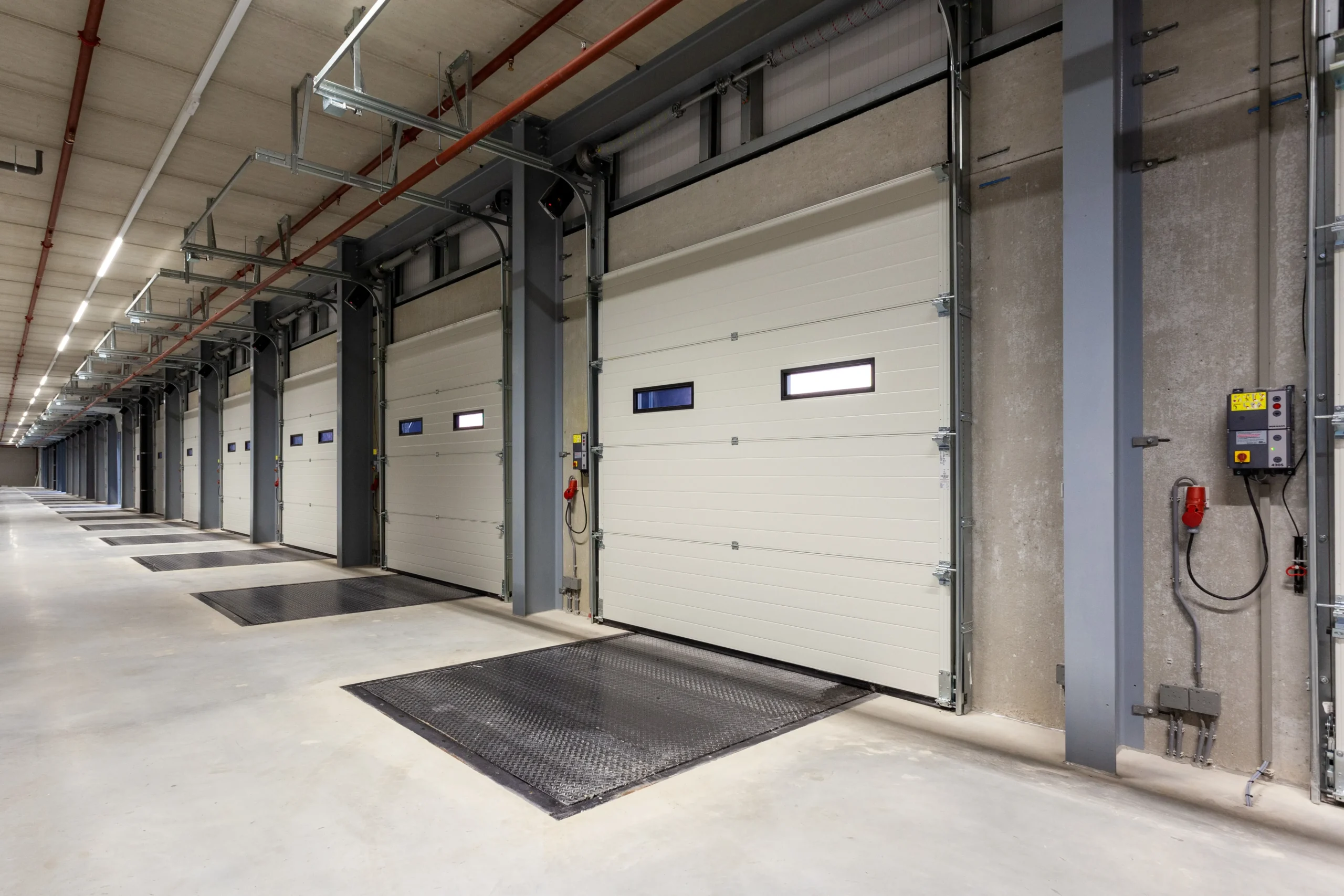
Professional Genie Garage Door Opener Repair in Marlton and Voorhees
Genie garage door opener repair in Marlton and Voorhees demands a rigorous diagnostic approach tailored to South Jersey humidity and winter temperature drops. We restore malfunctioning drive carriages, optic sensors, and logic boards to keep residential doors operating smoothly year-round. Our team addresses underlying mechanical friction alongside electrical failures to extend total system lifespan.
Over years of servicing Camden County properties, we have seen how local environmental conditions directly impact automatic door hardware. High summer humidity causes wooden and insulated composite garage doors to absorb moisture, adding significant dead weight to the lifting system. When winter temperatures drop below freezing, lubricants inside overhead tracks thicken, and steel components contract, creating unexpected drag on Genie powerheads.
When a Genie opener struggles, homeowners often assume the circuit board or motor has completely burnt out. However, our field inspections frequently reveal that the opener motor is reacting to extreme door imbalance or worn spring assemblies. For example, on a recent call along Route 73 near Evesham Road in Marlton, a homeowner reported that their Genie SilentMax 1000 belt drive unit was intermittently reversing midway through its closing cycle.
Our technicians discovered that seasonal thermal contraction had shifted the garage door track alignment by just three millimeters, causing the top door roller to bind against the curve. The powerhead’s internal electronic force monitor correctly detected the obstruction and reversed the door as a safety protocol. Rather than replacing the logic board, we realigned the track system, adjusted the belt tension according to guidelines from The Genie Company, and calibrated the close-force limiters.
Diagnostic Framework for Common Genie Opener Failures
Systematically diagnosing Genie garage door openers requires isolating mechanical drive resistance from control board logic faults before replacing parts. We evaluate powerhead LED diagnostic codes, sensor loop voltage, and mechanical coupler wear to pinpoint root causes efficiently. This structured approach prevents misdiagnosis and saves homeowners from unnecessary component replacements.
To streamline our field calls in Marlton and Voorhees, we rely on an extractable diagnostic framework that isolates specific symptoms:
- Red LED Blinking (2 Flashes): Indicates a photo-electric sensor obstruction, wire short circuit, or misaligned Safe-T-Beam module.
- Red LED Blinking (3 Flashes): Signals a wall console wire short or continuous push-button lock engagement.
- Motor Hums but Screw/Belt Does Not Turn: Points to a sheared drive shaft coupler or a blown motor starting capacitor.
- Opener Runs Briefly then Reverses: Indicates mechanical door binding, excessive spring tension loss, or incorrect force limit settings.
- Complete Powerhead Unresponsiveness: Points to a blown primary logic board fuse, tripped circuit breaker, or line voltage surge damage.
When we inspect powerheads in South Jersey homes, we first disconnect the opener from the door hardware to test each system independently. If the powerhead motor operates smoothly while disengaged, the fault lies within the door balance, torsion springs, or track rollers. If the motor clicks without turning, we measure incoming AC voltage and test the micro-farad rating of the motor starting capacitor using a digital multimeter.
Logic board failures frequently stem from coastal storm power surges or localized lightning strikes across Camden County. When voltage spikes hit an unprotected powerhead, microprocessors on the circuit board freeze or lose memory parameters. In these cases, we clear the memory, test the board’s relay switching output, and install surge suppression hardware to safeguard sensitive electronics.
Genie Drive Systems: Trade-Off and Failure Analysis
Choosing between Genie screw, belt, and chain drive systems requires balancing operational noise against torque transfer efficiency and seasonal thermal durability. Each drive mechanism exhibits specific wear patterns when subjected to heavy South Jersey residential garage door loads. Understanding these mechanical trade-offs allows us to recommend optimal repair strategies.
Every drive system architecture present in Genie product lines comes with distinct advantages and failure thresholds. Screw drive units excel in raw torque output, making them ideal for heavy solid wood doors, but their aluminum rails wear down rapidly if run without low-temperature grease. Belt drive systems, featuring steel-reinforced rubber belts, provide ultra-quiet operation for living spaces located above garages, though extreme ambient heat can alter belt tension.
| Drive Type | Noise Level | Maintenance Requirements | Cold Weather Resilience | Primary Mechanical Failure Mode |
|---|---|---|---|---|
| Genie Screw Drive (MachForce Series) | Moderate | Bi-annual lithium rail lubrication | High | Stripped drive carriage teeth and coupler shear |
| Genie Belt Drive (SilentMax Series) | Low | Annual tension verification | Moderate | Belt tooth shearing and tension spring fatigue |
| Genie Chain Drive (ReliaG Series) | High | Annual chain lubrication and tensioning | High | Sprocket wear and drive gear tooth stripping |
If your Voorhees home features an attached living room directly adjacent to or above the garage, prioritize a Genie belt drive unit for superior vibration dampening. If you operate a heavy double-car carriage house door in an uninsulated garage subject to sharp Marlton temperature swings, select a Genie screw drive unit or high-torque chain system.
We frequently encounter stripped screw drive carriages on older Genie installations. The carriage internal teeth are engineered out of a softer composite metal than the steel screw thread to protect the main motor from burning out during jams. When track friction increases due to neglected maintenance, the hard steel screw strips the soft carriage teeth, leaving the motor running freely while the garage door remains stationary.
Step-by-Step Genie Garage Door Opener Calibration and Troubleshooting
Restoring a malfunctioning Genie opener to factory specifications requires following an exact sequence of mechanical and electronic calibration steps. Skipping physical door balance checks before programming digital travel limits leads to accelerated motor relay fatigue and gear stripping. We apply standard procedural protocols on every service call in Marlton.
To ensure long-term reliability and compliance with safety standards set by the Door & Access Systems Manufacturers Association (DASMA), our technicians carry out repairs using the following sequence:
- Pull the red emergency release cord to disengage the carriage and manually raise the door to waist height to verify static balance.
- Inspect the Safe-T-Beam optical sensors for physical alignment, clean the optical lenses, and verify solid green and red indicator lights.
- Remove the powerhead housing cover to inspect the drive sprocket, motor coupler, and circuit board wiring harness connections.
- Re-engage the carriage assembly to the drive rail, press and hold the limit setting buttons, and program electronic open and close travel limits.
- Perform an auto-reverse force test by placing a full two-inch thick wooden block flat on the garage floor directly in the door’s path.
During force calibration, the door must automatically reverse within two seconds of contacting the wooden block. If the door crushes the wood block or fails to reverse, we immediately recalibrate the magnetic pulse encoder and electronic force potentiometers. Never compensate for a binding garage door by maxing out the opener’s force settings, as this creates a severe safety hazard and destroys internal gears.
We also verify that the wall console wires are correctly polarity-matched to the powerhead terminal screws. Reversed wiring on older Genie series consoles can cause erratic wall button behavior, such as requiring the button to be held down continuously to close the door.
Real-World Field Resolutions: Complex Genie Repairs in Camden County
Resolving complex Genie powerhead issues in South Jersey homes requires accounting for structural settling, power grid fluctuations, and garage microclimates. Our service calls across Camden County frequently reveal multi-factor failures where electrical glitches mask severe mechanical binding. We resolve these edge-case scenarios through methodical field testing and precise component overhauls.
In one recent instance at a residence near Kresson Road in Voorhees, a homeowner called us regarding a Genie MachForce screw drive unit that produced a loud grinding noise and stopped moving two feet off the ground. Initial visual inspection showed that the screw drive rail was completely dry and coated in dirty metal shavings. The homeowner had repeatedly pressed the wall button, causing the motor coupler to strip completely.
We resolved this issue by installing a heavy-duty replacement carriage assembly and a new neoprene motor coupler. We cleared the metal debris from the full length of the rail, applied temperature-stable white lithium grease, and adjusted the sagging torsion springs that were forcing the opener to lift over two hundred pounds of dead weight. The door subsequently operated at full speed with minimal noise.
Another complex repair in Marlton involved an integrated Genie Aladdin Connect smart opener that randomly opened the garage door during late night hours. The homeowner suspected a compromised Wi-Fi network or faulty smart module. We hooked up a spectrum analyzer to detect local radio frequency interference and discovered a stuck push-button switch on an old wireless keypad mounted on an exterior shed.
The stuck keypad button was transmitting continuous rolling code signals that coincided with line voltage fluctuations on the residential grid. We cleared all programmed remotes from the powerhead receiver memory, flashed the micro-logic board firmware, and re-paired only active transmitters using modern Intellicode dual-frequency remotes. We then installed a dedicated surge filter on the outlet to eliminate phantom activation cycles.
Frequently Asked Questions
How do we identify if a Genie garage door opener motor or capacitor has failed?
We identify a failed starting capacitor when the motor hums loudly without turning the drive screw or belt. If the capacitor is healthy but the powerhead remains completely silent without any diagnostic LED lights, we test the transformer coil and main circuit board relays for electrical continuity using a multimeter.
Why is our Genie Safe-T-Beam light blinking red in Marlton homes?
A red blinking light on a Genie Safe-T-Beam sensor indicates an optical misalignment, dirty lens, or wire fault between the sensor and powerhead. We resolve this by cleaning the optic lenses, realigning the emitting and receiving heads until the indicator glows solid, and replacing pinched low-voltage bell wire.
Can we upgrade an older Genie Intellicode system to smart connectivity?
We can easily upgrade older Genie Intellicode openers by installing an Aladdin Connect retrofit receiver kit connected to your home Wi-Fi network. This allows you to monitor door status, receive real-time open/close alerts, and operate your garage door securely using a smartphone application.
What causes a Genie screw drive opener to hum without moving the garage door?
A humming Genie screw drive opener with no rail movement is typically caused by a sheared rubber motor coupler or a completely stripped drive carriage. We repair this by replacing the worn coupler between the motor shaft and screw rail and fitting a new carriage assembly onto the drive screw.
How often should homeowners near Voorhees service their Genie garage door opener?
Homeowners near Voorhees should have their Genie garage door opener serviced at least once a year to prevent premature wear from humidity and seasonal temperature changes. Annual professional servicing includes lubricating the drive rail, verifying door balance, adjusting travel limits, and testing reverse safety sensors.
Sources
- The Genie Company Official Support & Product Documentation: https://www.geniecompany.com
- Door & Access Systems Manufacturers Association (DASMA) Safety Standards: https://www.dasma.com