
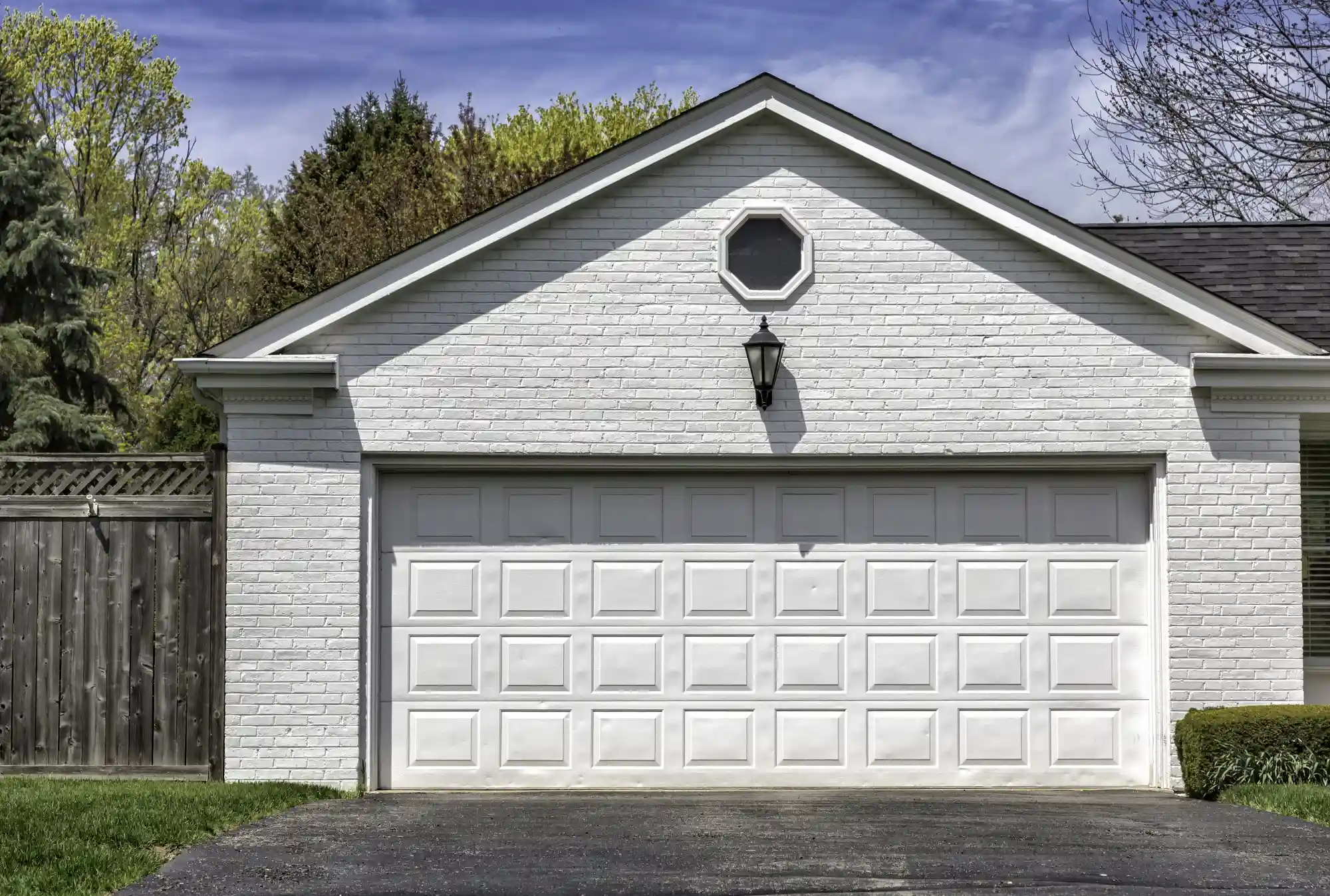
Comprehensive Safety Garage Door Inspection in Cherry Hill and Voorhees
A comprehensive safety garage door inspection in Cherry Hill and Voorhees evaluates mechanical tension systems, structural integrity, and electronic entrapment safeguards to protect your home. We evaluate every moving component, including high-tension torsion springs, aircraft-grade lifting cables, track alignment, and UL 325 auto-reversing features, ensuring full compliance with national safety standards and local building codes.
In South Jersey communities like Voorhees Township, Gibbsboro, and Cherry Hill, seasonal fluctuations expose overhead doors to significant thermal expansion and humidity changes. These climate variations cause metal tracks to shift, springs to lose calibrated tension, and electronic sensors to fall out of optical alignment. We inspect overhead doors with a meticulous, multi-point protocol designed to detect minor mechanical wear before it escalates into hazardous equipment failure.
Our hands-on field experience across Camden County reveals that homeowners often overlook subtle early warning signs, such as slight door imbalance or high-pitched cable friction. According to technical standards established by the Door & Access Systems Manufacturers Association (DASMA), overhead door assemblies require regular professional evaluations to ensure safe operation. We combine visual assessments with precise mechanical testing to guarantee every residential door operates smoothly and securely.
Essential Components of a Professional Safety Inspection
A professional safety inspection examines three core operational layers: force mechanics, structural equilibrium, and photoelectric entrapment protection. We systematically evaluate spring balance, cable friction, roller wear, track plumbness, and sensor beam height to ensure your heavy overhead garage door stops and reverses instantly when an object or family member obstructs its path.
Our comprehensive inspection protocol focuses on the primary physical components that handle heavy moving forces and critical user safety. We systematically evaluate these vital areas:
- Torsion and extension spring integrity, checking for surface corrosion, coil separation, and structural fatigue.
- Steel aircraft cables and bottom brackets, confirming zero fraying, oxidation, or loose fasteners.
- Photoelectric infrared sensors, verifying beam height between four and six inches above the floor level.
- Track alignment and roller bearings, ensuring smooth vertical movement without binding or excessive lateral play.
- Emergency disconnect mechanism, guaranteeing immediate manual operation during severe power outages.
To maintain rigorous safety standards on every job site, we execute a sequential inspection workflow:
- Conduct a comprehensive visual check of all structural panels, hinges, tracks, and fasteners.
- Disengage the automatic operator to manually check door balance at knee-height and waist-height positions.
- Test mechanical force sensitivity and verify automatic reverse response using a standardized wood block test.
- Obstruction-test photoelectric safety eyes to ensure the infrared light beam immediately triggers reverse travel.
- Measure opener motor drive strain and adjust limit switches to prevent motor burn-out or track binding.
Diagnostic Framework: Pre-1993 vs Modern UL 325 Systems
Modern overhead door systems require dual-stage entrapment protection under UL 325 standards, whereas older legacy systems lack crucial photoelectric sensor safety nets. We evaluate mechanical force limits alongside optical beam functionality to determine whether an existing opener requires immediate sensor recalibration, component restoration, or full motorized system replacement to eliminate physical entrapment risks.
Federal safety mandates established by the U.S. Consumer Product Safety Commission (CPSC) require residential automatic openers manufactured after 1993 to feature external entrapment protection devices. Homes in older Cherry Hill and Voorhees neighborhoods often harbor legacy opening units that fail to meet these modern standards. We assess each home’s setup against current safety guidelines to help families upgrade outdated equipment and prevent devastating crushing injuries.
Evaluating system age and mechanical condition helps homeowners make informed repair versus replacement decisions:
| System Feature | Pre-1993 Legacy Systems | Modern UL 325 Compliant Systems |
|---|---|---|
| Entrapment Safeguards | Single mechanical force sense only | Dual-stage: mechanical force + optical eye beams |
| CPSC Regulatory Status | Non-compliant with modern federal rules | Fully compliant with 16 CFR Part 1211 standards |
| Sensor Height Standard | Frequently missing or improperly mounted | Mandatory infrared sensors 4 to 6 inches off floor |
| Risk Profile | High entrapment risk for children and pets | Low risk with immediate auto-reversal technology |
| Recommended Action | Immediate full opener replacement | Annual safety inspection and force recalibration |
Choosing between component restoration and unit replacement requires balancing immediate repair costs against long-term operational safety. While restoring minor mechanical alignment on newer units is straightforward, replacing legacy pre-1993 operators is essential for absolute household safety. We guide Camden County homeowners through this decision framework using falsifiable diagnostic data rather than guesswork.
Real-World Case Study: Overcoming Complex Spring and Sensor Failures in Voorhees
During a routine residential safety inspection in Voorhees, our technicians identified a severe double failure involving unequal spring tension and misaligned photoelectric sensors. We safely relieved tension, replaced fatigued dual torsion springs, re-anchored worn bottom brackets, and re-calibrated the optical safety eye to restore full UL 325 mechanical and optical compliance.
The homeowner called us after noticing that the door shook violently during descent and occasionally failed to close completely. Upon arrival, we discovered that one torsion spring had lost significant torque, causing the steel cable on the right side to slacken and slip off the drum. Furthermore, the photoelectric sensors were mounted eight inches above the ground and angled away from each other, rendering the primary safety reverse completely ineffective.
To resolve this high-risk situation, we locked the door in place and safely unwound the remaining spring tension using certified winding bars. We replaced both matched torsion springs, re-strung high-strength steel cables, and anchored bottom lift brackets with corrosion-resistant fasteners. Finally, we remounted the photoelectric sensors exactly five inches off the concrete floor and calibrated the beam alignment, successfully passing all obstruction and reverse force tests.
Frequently Asked Questions
How often should home owners in Voorhees and Cherry Hill schedule a garage door safety inspection?
We recommend scheduling a comprehensive garage door safety inspection at least once per year to identify mechanical wear and maintain proper safety system operation. Annual inspections allow us to adjust spring tension, lubricate moving parts, and verify that optical entrapment sensors function correctly. Homes experiencing heavy daily use or extreme winter temperature shifts in South Jersey benefit from bi-annual checkups.
What is the 2×4 auto-reverse safety test for garage doors?
The 2×4 auto-reverse safety test verifies that your garage door opener automatically stops and reverses when the bottom edge strikes a flat two-inch wood block laid flat on the floor. To perform this test, we lay a solid 2×4 flat on the ground directly in the door’s closing path and initiate full closing travel. If the door contacts the block and fails to reverse within two seconds, the force setting or opener requires immediate professional service.
Why is it dangerous to adjust garage door springs without professional help?
Garage door springs operate under extreme mechanical tension capable of inflicting severe physical injury or property damage if released improperly. Torsion and extension springs hold hundreds of pounds of potential energy required to lift heavy overhead doors. Attempting DIY adjustments without specialized winding bars and professional experience frequently leads to snapped cables, flying metal components, and serious bodily harm.
What are the federal UL 325 requirements for residential garage door openers?
Federal UL 325 standards mandate that all residential garage door openers feature dual entrapment protection, including a secondary non-contact sensor system like photoelectric eyes. These regulations require optical sensors to be installed near the floor to detect obstacles and trigger auto-reversal immediately. Openers manufactured after 1993 must comply with these regulations to prevent entrapment hazards.
What causes garage door sensors to misalign in South Jersey homes?
Garage door sensors typically lose alignment due to accidental physical impacts, thermal expansion, vibration during door travel, or dirt accumulation on optical lenses. In local garages, lawn equipment or trash cans frequently bump safety eyes out of alignment. Cleaning the lenses with a soft cloth and adjusting the sensor brackets until both LED indicator lights glow steadily usually resolves basic alignment issues.
Sources
- Door & Access Systems Manufacturers Association (DASMA): https://www.dasma.com
- U.S. Consumer Product Safety Commission (CPSC) Garage Door Safety Standards: https://www.cpsc.gov